
Glass Breaking Table
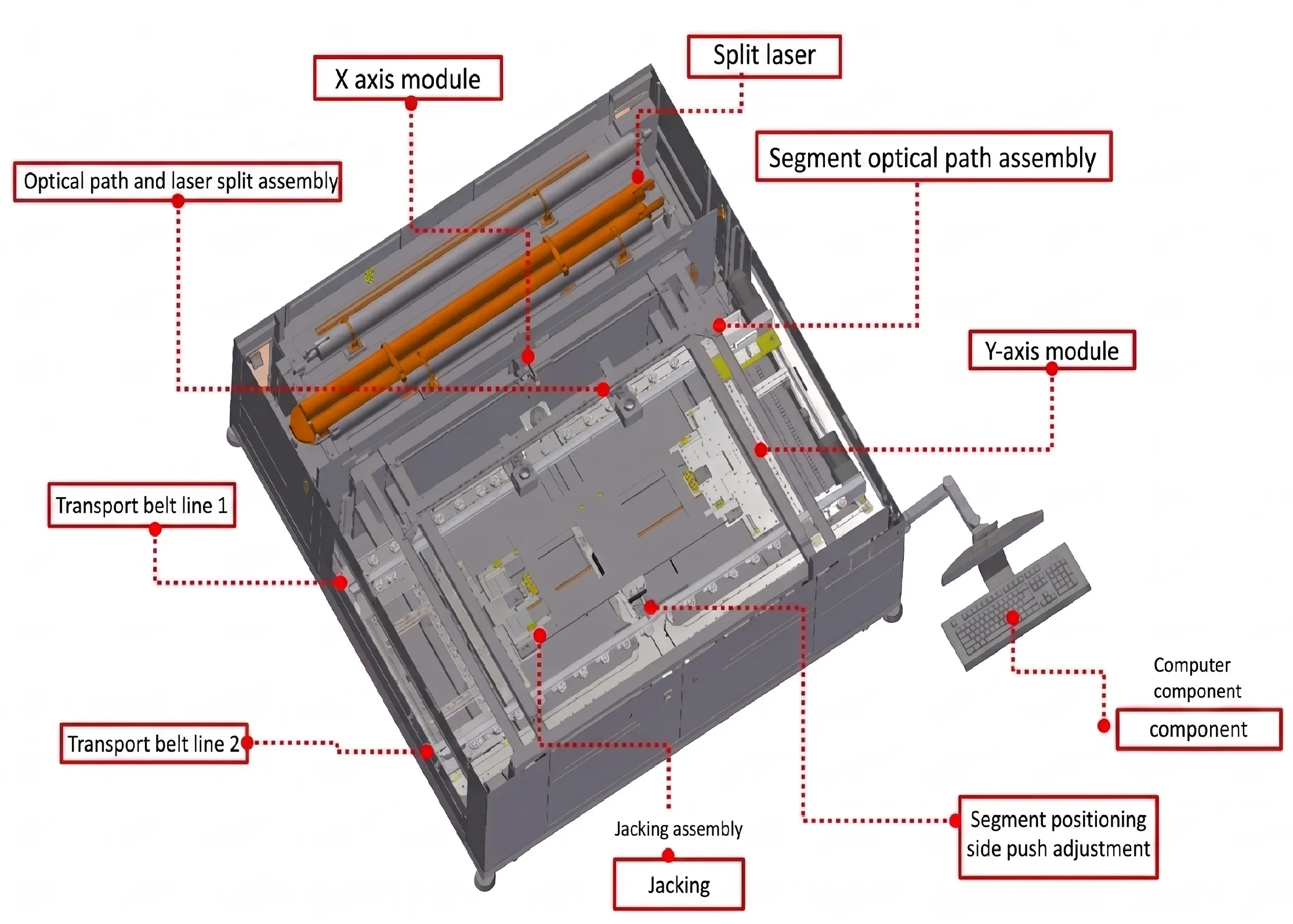
The Glass Breaking Table receives scored sheets from the cutting line and cleanly separates pieces along the score lines. Its flip-table design tilts the glass to the vertical for fast, ergonomic removal of finished panels, while the pneumatic pressure bar applies controlled downward force for clean, chip-free breaking across the full piece. Integrating with CNC cutting lines via air-float conveying, it keeps the production flow hands-free from score to separated panel.
How It Works
Five stages from scored sheet to separated panels — the complete breaking and unloading workflow.
Dry-Ice Splitting in Action
Thermal-shock splitting cleanly separates glass along score lines — a precise complement to mechanical breaking.

Why This Breaking Table
Six features that deliver clean separation and effortless unloading.
Flip-Table Unload Design
Tilts glass vertically for fast, ergonomic piece removal without sliding sheets across the bed — protecting edges and coatings while speeding up the unload step.
Pneumatic Pressure Bar
Applies controlled downward force along score lines for clean separation with minimal edge chipping — reliable breaking across the full piece every cycle.
Double-Cross Break-Out
Our pneumatic system safely and cleanly separates through-cut thick plates in both directions, boosting yield by reducing handling damage.
Air-Float Conveying
Hardwired fan reliability delivers unmatched air-float stability, letting operators position heavy sheets with one hand while fully protecting the glass surface.
Adjustable Breaking Pressure
Handles glass from 2–19mm — from thin coated sheets to thick architectural plates — with fine pressure control for clean, chip-free separation.
Sturdy Welded-Steel Frame
A rigid welded-steel frame with industrial felt surfaces protects glass quality through every cycle and stays true across years of continuous operation.
Clean Separation, 2–19mm
Adjustable breaking pressure handles everything from thin coated sheets to thick architectural plates — chip-free, every cycle.
Technical Specs
Every parameter engineered for clean, chip-free glass separation.
How It Compares
Automatic breaking vs. manual and semi-automatic alternatives.
Hanwin Glass Breaking Table leads in Cleanliness (95), Ergonomics (92), and Versatility (90) — delivering chip-free separation with fast, fatigue-free unloading.
Where It Excels
From high-volume lines to delicate thin glass — one breaking table, every application.
High-Volume Cutting Lines
Continuous Production
In high-volume curtain wall and architectural glass facilities, the breaking table is the last step before sorting. Air-float conveying and one-touch unload keep the line flowing hands-free from score to separated panel, matching cutting line throughput.
Choose Your Configuration
Three tiers from pneumatic breaking to fully automated smart-factory integration.
Standard
Pneumatic BreakingProfessional
Air-Float Auto UnloadEnterprise
Smart Factory IntegrationKeep It Running
Five essential maintenance practices to protect your glass and maximize uptime.
Inspect the table surface and felt coverings for cuts, burns, or compressed areas. Brush away embedded glass particles. Replace felt sections that show visible damage — damaged felt can scratch coated and Low-E glass.
Check compressed air supply pressure (0.5–0.7 MPa), drain the air filter separator, and inspect the pressure bar cylinders and hoses for leaks. Verify breaking pressure calibration for the current glass thickness range.
Inspect the hardwired air-float fans and bearings for wear, vibration, or noise. Clean fan intakes and filters of glass dust. Verify even air distribution across the table surface.
Inspect the flip-table tilt mechanism, hinges, and hydraulic/pneumatic actuators. Check safety interlocks that prevent tilt while operators are in the breaking zone. Lubricate pivot points with approved oil.
Perform a complete mechanical inspection of the frame, pressure bar, air-float deck, and tilt mechanism. Check all electrical connections and safety systems including light curtains and emergency stops. Update PLC software if available.
Common Questions
Everything you need to know about the Glass Breaking Table.
The standard table handles glass up to 6100×3300mm (approximately 20×10 feet) with a minimum of 300×300mm. Custom table sizes are available on request for unusual production formats.
Scored sheets are conveyed onto the table where the pneumatic pressure bar applies controlled downward force along the score lines. Pressure is adjustable from 50–300 kg to handle glass from 2mm to 19mm thickness, ensuring clean separation with minimal edge chipping.
The flip-table tilts the entire glass sheet to a vertical position for fast, ergonomic removal of finished panels. This eliminates the need to slide glass across the bed, protecting edges and coatings while speeding up the unload step.
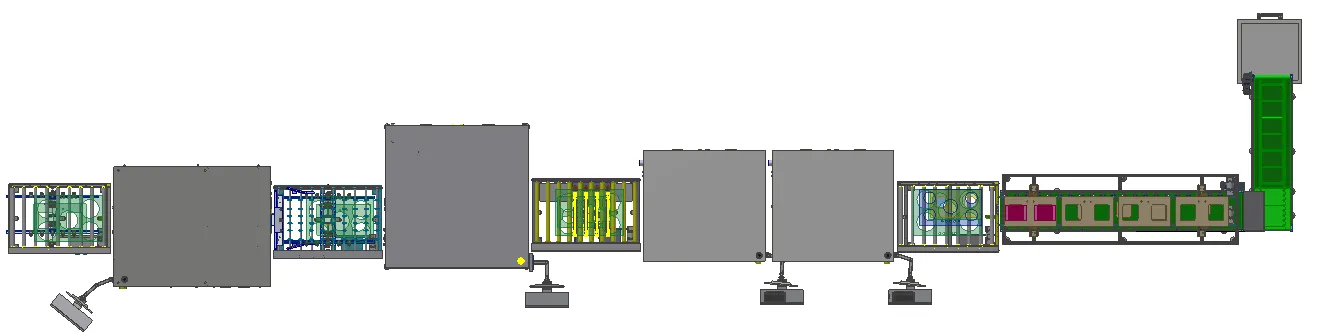
Yes. The breaking table is designed as a modular companion to CNC cutting lines. It connects via standard motorized roller conveyor or air-flotation table, and our engineers provide integration support during installation to ensure seamless connection with your existing equipment.
Yes. The adjustable pneumatic pressure bar handles glass from 2–19mm. The double-cross break-out system cleanly separates through-cut thick plates, while fine pressure control protects delicate thin and coated sheets.
Every unit includes light curtains around the breaking zone, dual-palm operator buttons for manual override, emergency stop buttons at multiple positions, and safety interlocks on all access doors and the flip-table mechanism. The system meets CE safety standards.
Get a Quote
Tell us about your production needs and we'll recommend the right breaking table configuration.
Contact Information
Pre-configured for Glass Breaking
Your enquiry is pre-tagged for our Glass Breaking Table. Include your glass sizes, thickness range, and daily volume for a faster response.
Break Clean with Zero Chipping
Air-float conveying, pneumatic pressure-bar breaking, and flip-table unloading — clean separation on every sheet, 2–19mm.